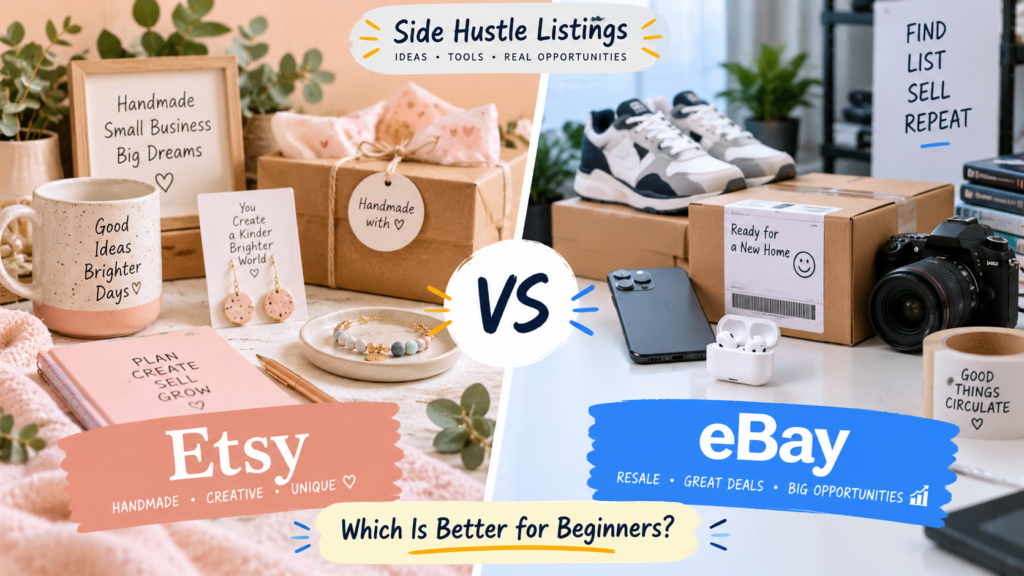
Starting an online store can be exciting, but choosing the right marketplace is often one of the first major decisions new sellers face. Etsy and eBay are two of the most popular platforms for independent sellers, yet they serve different audiences and selling styles.
Etsy is best known for handmade products, vintage items, craft supplies, and creative goods. eBay offers a much broader marketplace, where sellers can list everything from electronics and clothing to collectibles, used household items, and wholesale products.
So, which platform is better for beginners? The answer depends on what you plan to sell, how you want to manage listings, and whether you prefer a focused creative marketplace or a large general-purpose platform.
Etsy vs eBay: The Main Difference
The biggest difference between Etsy and eBay is their focus.
Etsy is a niche marketplace built around creativity, design, personalization, and unique products. Customers often visit Etsy specifically because they want something handmade, customized, artistic, or difficult to find in traditional stores.
eBay is a broad marketplace with millions of listings across many categories. Buyers may be searching for specific products, comparing prices, bidding in auctions, or looking for used and collectible items.
Here is a quick comparison:
| Feature | Etsy | eBay |
|---|---|---|
| Best for | Handmade, vintage, creative, and personalized products | New, used, collectible, and general merchandise |
| Selling style | Mostly fixed-price listings | Fixed-price listings and auctions |
| Audience | Shoppers seeking unique products | Shoppers seeking variety, value, and specific items |
| Branding | Strong shop identity | More product-focused |
| Competition | High within creative niches | High across many categories |
| Beginner friendliness | Simple for focused product lines | Flexible but more complex |
Selling on Etsy
Etsy attracts buyers who appreciate original products and independent sellers. Popular categories include handmade jewelry, art prints, home décor, wedding accessories, clothing, digital downloads, craft supplies, and vintage goods.
Advantages of Etsy for Beginners
A Focused Customer Base
Etsy shoppers are generally looking for products with personality. They may value handmade production, sustainable materials, personalization, or small-business ownership more than the lowest possible price.
This can make it easier for a new seller to compete based on design and quality rather than matching mass-market prices.
For example, a seller offering personalized wedding invitations may have a better chance on Etsy than on eBay. Buyers searching for custom stationery are already likely to understand the value of a specialized product.
Simple Store Setup
Opening an Etsy shop is relatively straightforward. Sellers can create listings, upload product photos, write descriptions, set prices, and choose shipping options without building a separate website.
Etsy also provides tools for managing orders, communicating with customers, reviewing shop statistics, and promoting listings.
Strong Branding Opportunities
Etsy shops can develop a recognizable visual identity. Product photography, banners, shop announcements, packaging, and listing descriptions all contribute to a consistent brand.
This is particularly useful for sellers who plan to build a long-term business rather than simply sell unwanted items.
Good Fit for Digital Products
Etsy is popular with sellers of digital products such as printable planners, wall art, templates, invitations, résumé designs, and educational resources. Digital products can be delivered automatically, eliminating packing and shipping.
However, sellers should make sure their products are original and comply with Etsy’s intellectual property and marketplace rules.
Disadvantages of Etsy for Beginners
A More Limited Product Range
Etsy is not suitable for every type of product. General electronics, ordinary household goods, mass-produced items, and many types of resale inventory may not fit the platform’s marketplace standards.
Vintage products generally need to meet Etsy’s age requirements, while handmade items must follow rules about how they are produced and represented.
High Competition in Popular Niches
Etsy may be niche-focused, but it is not competition-free. Categories such as digital planners, jewelry, candles, and art prints can contain thousands of similar listings.
New sellers need strong photography, accurate keywords, appealing descriptions, and a clear product difference to gain attention.
Fees Can Affect Profit
Etsy typically charges listing fees, transaction fees, payment processing fees, and potentially advertising-related costs. The exact amount depends on the seller’s location, payment setup, and participation in optional programs.
Before listing products, calculate the total fees and include them in your pricing strategy.
Selling on eBay
eBay is one of the world’s largest online marketplaces. It supports a wide range of products and gives sellers the choice between fixed-price listings and auctions.
Advantages of eBay for Beginners
Nearly Any Product Category
eBay is highly flexible. Beginners can sell used clothing, books, tools, toys, electronics, collectibles, auto parts, home goods, and many other products.
This makes eBay especially useful for people who want to start with items already in their home. Selling unused possessions can be a practical way to learn photography, pricing, shipping, and customer service without investing in inventory.
Auction and Fixed-Price Options
eBay’s auction format can be valuable for rare, collectible, or highly sought-after products. Buyers compete against one another, potentially increasing the final selling price.
Fixed-price listings are better for ordinary products with a predictable market value. Sellers can also use features such as offers, quantity listings, and scheduled promotions depending on the product and account.
Large Buyer Traffic
Because eBay has a broad international audience, sellers may reach customers who are actively searching for specific products. A buyer looking for a discontinued video game, replacement appliance part, or particular model of camera may search eBay directly.
This demand can benefit sellers with products that are less visually distinctive but highly searchable.
Useful for Testing Different Products
A beginner can experiment with several categories on eBay. For example, someone might sell books, vintage kitchenware, and used electronics while learning which products generate the best margins.
That flexibility is harder to achieve on a specialized platform.
Disadvantages of eBay for Beginners
More Price Competition
Many eBay buyers are highly price-conscious. They often compare multiple listings, review shipping costs, and look for discounts.
This can make it difficult to sell ordinary products at premium prices. Sellers need accurate market research and realistic expectations about profit.
More Complicated Shipping Considerations
eBay sellers may need to handle a wide range of product sizes, weights, destinations, and delivery requirements. Large or fragile products can be difficult to ship profitably.
Shipping mistakes can reduce profits or create customer-service problems, so beginners should understand packaging costs and carrier rates before listing an item.
Auctions Require Careful Pricing
Auctions can produce excellent results, but they also carry risk. If an item receives limited interest, it may sell for less than expected.
Sellers should research completed listings and choose appropriate starting prices, auction lengths, and reserve settings where available.
Customer Service and Returns Matter
eBay places considerable importance on seller performance. Late shipping, inaccurate descriptions, cancellations, and unresolved disputes can damage a seller’s account.
Clear descriptions, realistic handling times, and prompt communication are essential.
Fees: Which Platform Is Cheaper?
Neither platform is automatically cheaper for every seller. The real cost depends on the item’s price, category, shipping method, payment processing, and optional advertising.
Common Etsy costs may include:
- Listing fees
- Transaction fees
- Payment processing fees
- Off-site or promoted advertising fees
- Currency conversion fees in some situations
Common eBay costs may include:
- Insertion fees after any available free listings
- Final value fees
- Payment processing costs
- Optional promoted listing fees
- Store subscription fees for some sellers
A simple profit calculation can help:
Selling price − product cost − marketplace fees − packaging − shipping − advertising = estimated profit
For example, suppose a handmade candle sells for $28. After subtracting materials, packaging, marketplace fees, and shipping, the seller may discover that the actual profit is much lower than expected. The same calculation applies to an eBay item such as a used tablet or collectible card.
Beginners should calculate profit before listing, not after making a sale.
Which Platform Is Easier to Start?
Etsy is often easier for beginners who already have a focused product line. A seller with ten types of handmade earrings, for example, can create a cohesive shop and target a clear audience.
eBay may be easier for beginners who want to sell items they already own. Listing a few books, games, or household products can provide hands-on experience without requiring product development.
In general:
- Choose Etsy for a focused creative brand.
- Choose eBay for flexibility and broad product categories.
- Use Etsy for handmade, customized, vintage, or digital products.
- Use eBay for used goods, collectibles, electronics, and general merchandise.
How to Succeed as a Beginner on Either Platform
Use High-Quality Product Photos
Photos are among the most important factors in online selling. Use natural lighting, clean backgrounds, multiple angles, and close-ups of important details.
Show product scale when helpful. For clothing, include measurements. For used products, photograph scratches, wear, labels, and flaws honestly.
Write Specific Descriptions
Avoid vague descriptions such as “great item” or “beautiful product.” Explain exactly what the customer will receive.
Include:
- Dimensions
- Materials
- Color
- Condition
- Quantity
- Compatibility
- Processing time
- Shipping details
- Personalization instructions, if relevant
Accurate descriptions reduce questions, returns, and disappointed customers.
Research Before Pricing
Look at sold listings rather than only current listings. Current prices show what sellers hope to receive, while completed sales provide better evidence of what buyers actually paid.
Compare similar products based on condition, brand, size, features, and shipping terms.
Start With a Manageable Inventory
Beginners do not need hundreds of listings immediately. Start with a small selection, study the results, and improve gradually.
A small inventory makes it easier to identify which products sell, which keywords attract traffic, and which items create too much work for too little profit.
Provide Reliable Customer Service
Respond to messages professionally and within a reasonable timeframe. Ship orders when promised and use appropriate packaging.
Positive reviews are valuable on both platforms, but they are earned through consistent performance rather than simply requesting them.
Can You Sell on Both Etsy and eBay?
Some sellers use both marketplaces, but this approach requires organization. A product that fits Etsy’s creative audience may not perform the same way on eBay, and vice versa.
Selling on both platforms can increase exposure, but it also creates additional responsibilities:
- Maintaining accurate inventory
- Updating prices and product descriptions
- Tracking orders from multiple sources
- Managing different fee structures
- Avoiding accidental overselling
It may be best to begin with one platform, establish a reliable process, and expand only after the first marketplace becomes manageable.
Final Verdict: Etsy or eBay for Beginners?
Etsy is usually the better choice for beginners selling handmade, personalized, vintage, artistic, or digital products. Its focused audience and branding tools make it suitable for building a creative business.
eBay is usually better for beginners selling used items, collectibles, electronics, clothing, books, or a broad mix of products. Its flexible categories and auction options make it useful for testing different inventory.
The best platform is not necessarily the one with the lowest fees or the largest audience. It is the one that matches your products, skills, and business goals. Start small, track every cost, create accurate listings, and focus on dependable customer service. With those basics in place, either Etsy or eBay can be a practical starting point for an online selling business.